
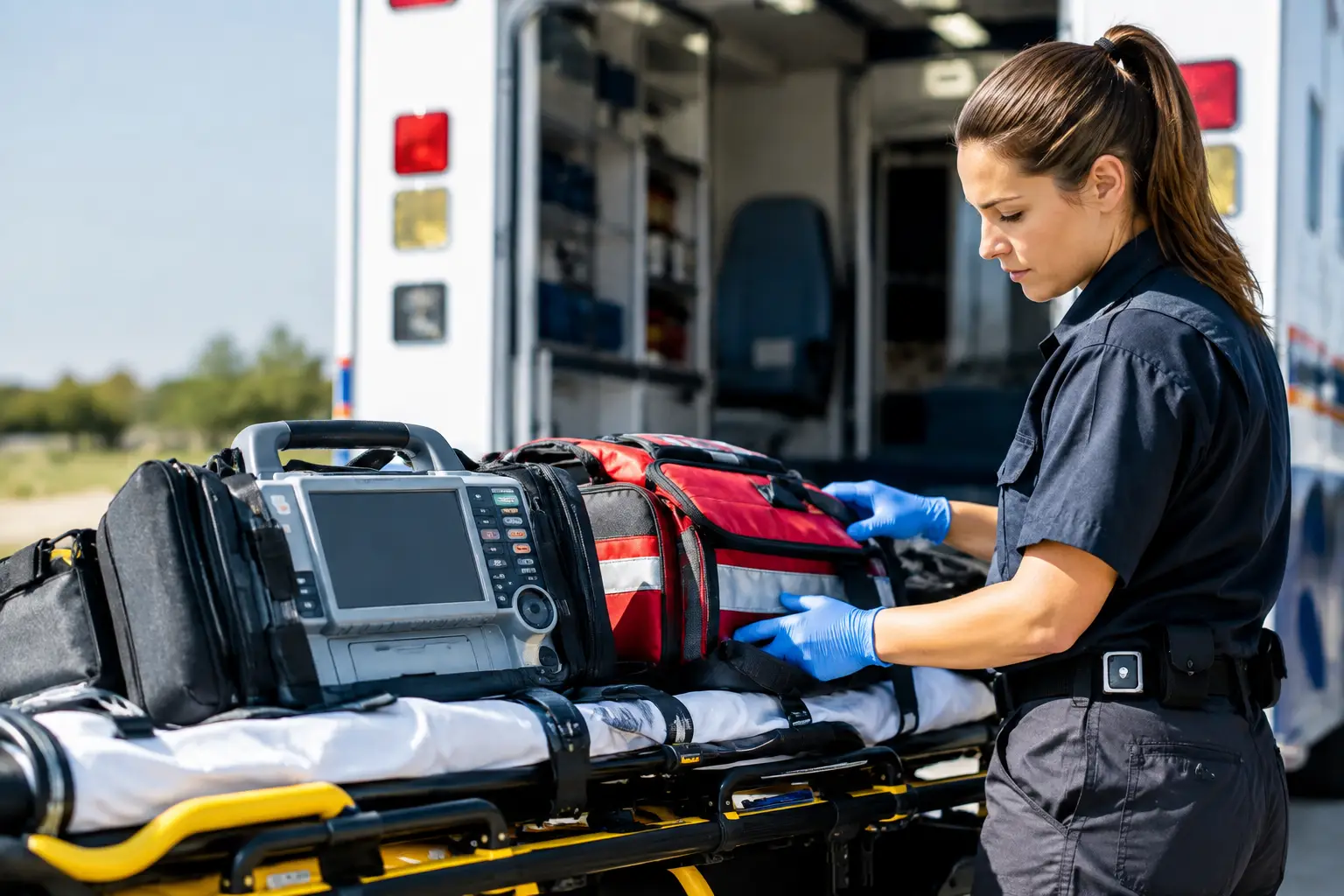
A cardiac monitor nearing end of life, radios that cannot communicate across jurisdictions, or an ambulance replacement plan that keeps moving to next year’s budget are not abstract capital needs. They are operational risks. EMS equipment grant opportunities can help close those gaps, but the right opportunity is rarely the one with the broadest equipment list or the largest stated award. It is the one your agency is eligible to pursue, can administer correctly, and can put into service without creating an unfunded obligation later.
Start with the operational problem, not the equipment catalog
A grant application is stronger when equipment is presented as the solution to a defined service problem. Before searching, document what is failing or missing, who is affected, and what changes if the purchase is funded. For example, a request for powered stretchers is more credible when tied to responder injury trends, patient-transfer volume, workforce retention, and the number of units that need compatible loading systems.
The same discipline applies to communications, PPE, monitors, ventilators, rescue tools, fleet equipment, and station-based readiness equipment. Funders generally want to understand the public benefit, not simply confirm that an agency wants newer gear. A clear needs statement connects the purchase to response capacity, clinical care, safety, disaster readiness, access in rural areas, or coordination with neighboring agencies.
Create a short internal equipment brief before staff begin a funding search. It should identify the item, quantity, estimated total cost, replacement rationale, service area, affected population, procurement timeline, ongoing costs, and measurable outcome. This gives leadership a consistent way to compare opportunities and prevents the team from rebuilding the case for need every time a notice appears.
Where EMS equipment funding commonly appears
Equipment funding does not always arrive under a program labeled “EMS grant.” Opportunities may be issued by federal agencies, state EMS offices, departments of health, homeland security and emergency management agencies, local governments, hospital systems, foundations, or regional collaboratives. Each source may frame the same basic need differently.
A preparedness-focused program may support interoperable communications, decontamination, mass-casualty supplies, or rescue capabilities. A rural-health program may emphasize access, response times, regional service gaps, and coordination with hospitals. A public-safety program may focus on responder protection or community resilience. Health-focused funding may support clinical equipment when it is part of a broader strategy for emergency care, overdose response, maternal health, behavioral health, or community paramedicine.
That distinction matters because it changes the story, eligible costs, and applicant. An ambulance service may be eligible to apply directly for one program, while another requires the application to come from a county, municipality, hospital, tribal government, nonprofit, or designated lead agency. Some opportunities favor regional projects, particularly where equipment will be shared through mutual aid or integrated into a coordinated response system.
Do not assume an opportunity supports a purchase because the notice mentions EMS. Read the allowable-cost section, any equipment definitions, and the budget rules. A program may permit supplies but not capital equipment, allow purchase but not installation, or fund a limited category of devices. It may also require prior approval before certain purchases are made.
How to evaluate EMS equipment grant opportunities
The fastest way to lose grant capacity is to advance every plausible notice to a full review. A disciplined screening process should answer four questions: Is the opportunity active? Is the organization eligible? Does the project fit the program’s purpose? Can the agency comply with the award requirements?
Confirm the current status and exact terms
Start with verified source information: application status, deadline, award period, available funding, anticipated award size, required cost share, and submission method. A funding watch or forecast can be useful for planning, but it is not an open application. Likewise, a program that closed last year may signal future demand, but its old deadline and rules should not drive current decisions.
Deadlines deserve more scrutiny than the final submission date. Determine whether the program requires registration, a letter of intent, local authorization, partner commitments, a pre-application, or governing-board approval. These steps can determine whether an otherwise attractive opportunity is still realistic.
Test eligibility beyond the applicant name
Eligibility is often more specific than it first appears. Geography, organizational structure, rural designation, service population, partnership requirements, and prior award status can all matter. A volunteer service, third-service agency, fire-based EMS division, hospital-based program, tribal provider, or nonprofit contractor may each be treated differently under the same funding announcement.
If the agency plans to work through a county or community partner, clarify roles before the application is drafted. Who will serve as the legal applicant? Who will procure and own the equipment? Who will maintain it? Who reports outcomes and manages any audit documentation? A partnership letter cannot repair an unclear operating model after an award is made.
Measure fit against the scoring criteria
The notice’s scoring criteria are a practical preview of the application. If reviewers prioritize high-need populations, rural distance, response-time barriers, regional coordination, clinical outcomes, or readiness gaps, the agency needs credible local evidence in those areas. If the application cannot answer the highest-value criteria with specificity, the opportunity may not be worth pursuing even when the equipment itself is allowable.
This is where a fit assessment is more valuable than a long list of grants. Consider the project need, eligibility, mission alignment, available evidence, deadline, internal workload, and implementation readiness together. A smaller award with a strong match may be a better use of staff time than a larger competition that requires a weakly connected narrative.
Build the budget as an implementation plan
Equipment budgets often fail because they are treated as a vendor quote rather than a full operating plan. The purchase price is only one part of the project. Depending on the equipment, the actual cost may include installation, vehicle modifications, accessories, software, subscriptions, warranties, maintenance, training, certification, connectivity, data integration, and replacement supplies.
Budget rules vary. Some funders allow indirect costs, while others restrict them. Some require a nonfederal match, identify match sources that are not acceptable, or prohibit costs incurred before the award start date. Federal and state awards may also include procurement standards, property-management requirements, reporting obligations, and restrictions on disposition of equipment after the project ends.
For that reason, involve operations, finance, procurement, clinical leadership, and technology staff early. Their review can expose practical issues that grant staff may not see: a monitor platform that does not integrate with the receiving hospital, a vehicle configuration that cannot support the proposed equipment, recurring licensing costs absent from the operating budget, or training time that will strain coverage.
A funder does not need a promise that the equipment will be useful. The application should show that the agency has a credible plan to receive it, deploy it, train staff, sustain it, and measure the intended benefit.
Use local data that explains urgency
Strong EMS equipment applications usually combine numbers with operational context. Call volume, transport distances, mutual-aid reliance, unit downtime, staffing patterns, service-area demographics, facility closures, overdose incidents, trauma trends, and hospital turnaround times can all help explain need when they are relevant to the project.
The goal is not to overload a narrative with statistics. Select data that establishes the gap and supports the proposed solution. If one cardiac monitor must cover multiple frontline units, explain the deployment consequence. If radio limitations delay coordination across a large rural county, describe the affected jurisdictions and incident types. If patient-lifting equipment is requested, connect injury data and workforce impact to improved safety.
When local evidence is incomplete, identify the gap honestly and build a workable collection plan. Estimates should be labeled as estimates, not presented as verified facts. Agencies can also strengthen the case through letters from hospitals, public-health departments, fire departments, law enforcement, schools, or community partners that can document the shared impact of the equipment.
Move quickly without forcing a weak application
A practical funding workflow is discover, analyze, match, and build. Discovery identifies potential notices. Analysis verifies the details. Matching determines whether the agency has a genuine reason to pursue the opportunity. Building turns a qualified match into a compliant application with a defensible budget, narrative, attachments, and implementation plan.
Not every deadline should become a grant-writing sprint. Declining a poor-fit opportunity can protect staff time for the next viable one. It may be wiser to place a future program on a funding watch, gather baseline data, obtain updated quotes, confirm partner roles, and secure leadership approval before the next cycle opens.
Atlas by Dr. Miltie helps organizations reduce this screening burden by translating funding notices into practical information on eligibility, deadlines, funding details, requirements, and organizational fit. The purpose is not to chase every listing. It is to identify credible opportunities that an EMS agency can actually pursue.
The best next step is simple: choose one equipment priority that affects service delivery now, document the operational case behind it, and use that brief to evaluate every funding notice that follows. When the right opportunity opens, your agency will be ready to act with evidence rather than urgency alone.